

LED strip lights come in different sizes and power levels, and two of the most common types are SMD 3528 and SMD 5050. These numbers refer to the size of the LED chips in millimeters. But size isn’t the only difference — they also vary in brightness, power consumption, and applications.
Thank you for reading this post, don't forget to subscribe!SMD 3528 and SMD 5050 LEDs are two common types of surface-mounted device (SMD) LED chips used primarily in LED strip lighting. The numbers 3528 and 5050 refer to the physical dimensions of the LED chips in millimeters:
- SMD 3528 LEDs measure 3.5mm x 2.8mm.
- SMD 5050 LEDs measure 5.0mm x 5.0mm.
What Is an SMD LED?
SMD stands for Surface-Mounted Device. These LEDs are mounted directly onto a circuit board and are widely used in strip lighting because they are compact, efficient, and easy to install.
SMD 3528 LEDs
Key Features:
- Size: 3.5mm x 2.8mm
- Single LED chip per package
- Lower brightness compared to 5050
- Typical power consumption: ~0.06 watts per LED
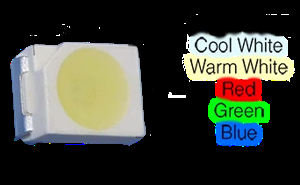
- Common color options: Single color (white, red, green, blue)
Best For:
- Accent lighting
- Backlighting
- Low-power decorative use
- Areas where subtle light is preferred
SMD 5050 LEDs
Key Features:
- Size: 5.0mm x 5.0mm
- Three LED chips in one package
- Much brighter than 3528
- Typical power consumption: ~0.18 watts per LED (3x 3528)
- Supports RGB and color-changing effects
Best For:
- General lighting
- Task lighting
- RGB color lighting (can mix red, green, and blue)
- Applications needing higher brightness

Key Differences Between SMD 3528 and SMD 5050 LEDs
1. Chip Size and Structure:
- The 3528 LED chip is smaller and contains a single LED diode.
- The 5050 LED chip is larger and typically contains three LED diodes in one chip, sometimes called “tri-chip” or “triple core” LEDs.
2. Brightness and Light Output:
- A single 3528 LED produces about 4 lumens using approximately 0.08 watts.
- A single 5050 LED produces about 12 lumens using approximately 0.24 watts, roughly three times the brightness of a 3528 LED because it contains three diodes.
3. Power Consumption:
- 3528 LEDs consume about 0.04 to 0.08 watts per LED.
- 5050 LEDs consume about 0.2 to 0.24 watts per LED, with some high-power versions consuming even more.
4. Applications and Use Cases:
- 3528 LEDs are often used for accent lighting, decorative lighting, and situations where lower brightness and power consumption are desired. They are commonly found indoors for under-cabinet lighting, stair lighting, and other low to medium illumination needs.
- 5050 LEDs are preferred for applications requiring higher brightness and color versatility. Because they can house three diodes, they are commonly used for RGB color-changing LED strips and can serve as primary light sources in some cases. They are suitable for task lighting, signage, and outdoor or commercial lighting where more intense illumination is needed.
5. Color Options:
- 3528 LEDs are generally single-color (warm white, cool white, red, green, blue, amber).
- 5050 LEDs can be single-color or multi-color (RGB or RGBW), allowing for dynamic color changing with the help of controllers.
6. Physical Strip Characteristics:
- 3528 LED strips typically use an 8mm wide PCB.
- 5050 LED strips often use a wider 10mm PCB to accommodate the larger chips.
7. Cost and Efficiency:
- 3528 LED strips are more cost-effective and energy-efficient but less bright.
- 5050 LED strips cost more but provide better brightness per watt, making them more efficient in terms of light output per cost in high-lumen applications.
Summary Table
| Feature | SMD 3528 LED | SMD 5050 LED |
|---|---|---|
| Chip Size | 3.5mm x 2.8mm | 5.0mm x 5.0mm |
| Number of Diodes | 1 | 3 |
| Brightness per LED | ~4 lumens | ~12 lumens |
| Power Consumption | ~0.04 – 0.08 watts | ~0.2 – 0.24 watts |
| Typical PCB Width | 8mm | 10mm |
| Color Options | Single color | Single color or RGB/RGBW or colorful change |
| Common Uses | Accent lighting, low brightness | High brightness, RGB color changing |
| Cost | Lower | Higher |
In conclusion, SMD 3528 LEDs are smaller, less bright, and more energy-efficient, making them suitable for decorative and low-light applications. SMD 5050 LEDs are larger, brighter, and more versatile, especially for RGB color-changing lighting and higher illumination needs.
Which Should You Choose?
- Choose SMD 3528 if you need soft, energy-efficient lighting for decoration, signs, or ambient glow.
- Choose SMD 5050 if you want brighter light or RGB color effects for more vibrant and versatile lighting setups.


